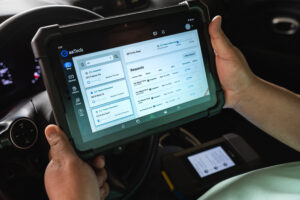
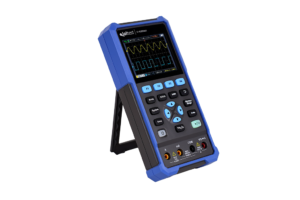
The CAN bus links the control units in a vehicle, and when communication fails, reading fault codes is not enough. With an oscilloscope such as the Jaltest JT2009 (two channels, 40 MHz) you can see what is really happening on the CAN-H and CAN-L lines.
What to look for
- CAN-H and CAN-L form a differential signal: at rest both sit at about 2.5 V, and during transmission they move apart (CAN-H up, CAN-L down)
- use both channels to measure the two lines at once and check that they mirror each other
- with the power off, measure the resistance between the lines: with the two 120 ohm terminating resistors it should be about 60 ohms
- a distorted signal, noise or a missing waveform often points to a poor connection, a short circuit or a faulty control unit
Values are indicative and vary by vehicle and bus, so always follow the manufacturer’s instructions.